The poet and the pendulum | A Retrospective exhibition of Sun Jianwei's 40-year creation journey |詩人與鐘擺——孫建偉四十年創作歷程回顧展@TAI Museum Shanghai, China
詩人與鐘擺——孫建偉四十年創作歷程回顧展
The poet and the pendulum—— A Retrospective exhibition of Sun Jianwei's 40-year creation journey
策展人 | 施勇 王惠子
Curators | Shi Yong, Keiko Wang

我們時代真正的藝術家,往往是那些在喧譁浪潮中獨自深潛的孤影,他們不描繪世界的表象,而是追問存在的根基。孫建偉,正是這樣一位藝術家。本次展覽“詩人與鐘擺”,旨在全面呈現這位獨行者如何以繪畫為媒介,完成了一場從西方悲劇哲學的劇烈反叛,到東方智慧澄明回️響的宏大精神史詩。
“詩人與鐘擺”的名字靈感來自於芬蘭搖滾樂隊Nightwish的一首歌,一首近十四分鐘的長篇史詩歌曲,此曲講述一名詩人受刑的心路歷程,可以説是創作者的自我審判曲,“詩人”暗指創作者本人,而“鐘擺”代指一個猶如鐘擺般揮舞的刀刃,正緩慢的往下移動,不斷的下墜和接近詩人,詩人自然感覺恐懼,但又恨不得加快鐘擺下墜的速度,好讓自己有個痛快的審判。孫建偉就像這位“詩人”,他的整體藝術創作之路就像“鐘擺”——跨越了中國當代藝術從現代主義啓蒙、市場狂飆至全面數字化時代的整整四十餘年,不管外面的世界在如何流轉更迭,孫建偉卻始終如一地航行在一條寂靜而深邃的精神河流上。
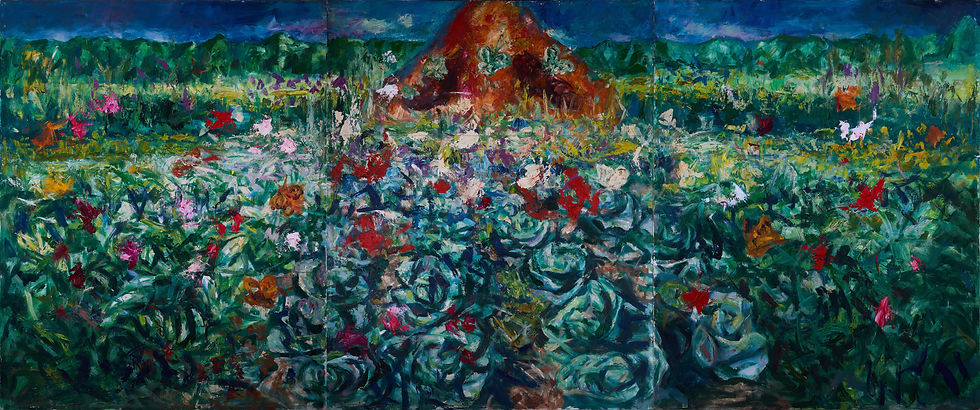
1,做夢者與酒 | The dreamer and the wine
在孫建偉的藝術起點,他是一個根植於上世紀八十年代上海表現主義土壤裏的“做夢者”—— 最堅定和純粹的代表。但那並非一種地域性的風格標籤,而是一場具有明確哲學指向的精神運動。與同期更多關注形式革命的“85新潮”羣體不同,上海的表現主義從一開始就帶有強烈的存在主義色彩和形而上學衝動。它承接的並非是現代主義的視覺遺產,而是近代德國哲學的思想血脈——尼采的“上帝已死”與“權力意志”,海德格爾的“存在之思”,成為這批藝術家內在的精神引擎。孫建偉從他1988年的早期代表作《人啊,苦難的人》開始,一種近乎粗野的筆觸、強烈扭曲的人物形態以及充滿戲劇性張力的暗色場景,就已宣告其藝術的終極關懷:人的苦難,及其救贖的可能。這絕非是一種感傷主義的人道關懷,而是尼采式的悲劇性肯定:正是在生命的痛苦、荒謬與斷裂處,人才有機會超越自身,觸及那崇高的、充滿神性光輝的“超人”境界。
整個九十年代,當中國社會經歷鉅變,當代藝術開始逐步系統化、市場化之時,孫建偉卻進入了一個更為孤絕的創作高峯期。這一時期的孫建偉的個人生活也經歷了許多重大轉變,他的生活曾經離不開酒,他畫面中的“人”,既是具體的歷史肉身,同時也承受着時代的重壓與創傷;如《受傷的人》系列、《上帝活着只是我們被鎖住了》、《政治立場》等,將其早期的悲劇意識推向了一個更復雜、更尖鋭的哲學高度;又是一個普遍意義上的“此在”(Dasein),在海德格爾的意義上被拋入世界,直面虛無與焦慮。藝術家用表現主義的語言,將這種存在的困境轉化為一種視覺的形而上學。粗礪的筆觸不再是情緒的發泄,而成為了對存在本質的追問;強烈的色彩對比不再是形式的實驗,而成為了神性之光與世俗之暗的搏鬥現場。在此,孫建偉的藝術證明了表現主義最深刻的力量:它不僅是“表現”情感,更是“揭現”存在。
2,原諒我,我有兩張臉,一張面對世人,一張面對上帝 |
Forgive me, I have but two faces, one for the world, one for God
也正是這種不妥協的精神性,似乎讓他在新世紀之後的藝術生態中顯得愈發“不合時宜”。在全球資本與消費主義共謀的狂歡中,在藝術不斷被媒介化、觀念化、符號化的潮流裏,孫建偉的繪畫固執地守護着一種近乎“過時”的嚴肅與沉重,但這種孤獨的堅守,恰恰是其藝術最寶貴的價值。它迫使我們去思考:當藝術失去對精神的重量和痛苦的質詢,還剩下什麼?孫建偉用他四十年的獨行,回答了這個問題:藝術真正的當代性,或許恰恰在於其對非時代性(untimeliness)的堅持,在於其對永恆問題的反覆叩問——這是他的“第一張臉”。
而這一切,都為他2010年後的藝術轉型埋下了深刻的伏筆,從西方走向東方,從激烈歸於平靜,並非一種精神上的撤退或妥協,而是一場更為深邃的哲學綜合與昇華。當他將目光投向靈性問題如東方哲學、佛教等議題時,早期尼采式的“權力意志”並未消失,而是被轉化了。尼采哲學中與佛教共有的對於“世間苦”的深刻認知,成為了連接的橋樑。但孫建偉並沒有走向寂滅般的虛無,而是走向了一種悲欣交集的澄明。
在他近年的作品中,我們看到的是一種“海德格爾式”的轉向:從與世界的對抗(尼采),轉向與世界的共處(海德格爾的“棲居”)。畫面中曾經劇烈扭曲的肉身,變得鬆弛而接納,孫建偉在此發展出了一種獨特的視覺語言,他並未沿用傳統佛教藝術的圖示與符號,而是將佛學的精神內核——慈悲、無常、空性——完全融化在其成熟的表現主義肌理之中,實現了尼采與佛陀在畫布上的對話。那道曾經的黑暗之光,化為了溫和而瀰漫的空性之光,畫面中出現大量的留白與風蝕般的痕跡,不再反叛,而是迴響——是早期所有掙扎、追問、痛苦最終在更廣闊的智慧中得到的回應與安頓——這是他的“第二張臉”。
3,帶我回家 Take me home
孫建偉近期創作的當代水墨,尤其是抽象化書法的創作,是其藝術脈絡中一個至關重要且邏輯自洽的昇華階段。這一轉變絕非簡單的媒介轉換或風格遊戲,而是其精神探索與哲學思考在語言層面上的必然抵達。經過數十年在油畫布上對肉身、神性、苦難等沉重議題的激烈表現後,水墨與書法為他提供了一條更直接、更純粹、更接近“元氣” 的通道。抽象書法直指線的運動與心的狀態,這種從描繪到書寫、從構建到流瀉的解放感。打破傳統書法的行列秩序與平衡美感,將畫面空間視為力量對抗與和解的戰場。
他雖書寫文字,但往往極力弱化其可讀性。文字在這裏不再是表意的符號,而是承載能量的視覺單元與引發冥想的禪機。這實現了他一直追求的“神性美學”的終極形式——一種脱離敍事的、純粹的精神振頻。作為中國藝術家,使用水墨書法是一種文化的返鄉。但他絕非迴歸傳統,而是用其全部的生命經驗和西方哲學積澱,對傳統進行了爆破與重構,創造出一種極具個人色彩和國際對話能力的當代抽象語言。
至此,孫建偉完成了一個完整的創造者循環:從學習與吸收(西方哲學與表現主義),到對抗與掙扎(在油畫中表達精神衝突),再到融合與轉化(佛教與東方哲學),最終抵達釋放與自在(在抽象書法中實現心手合一)。後期的水墨創作,是他藝術生命的高潮與華彩樂章,證明了他始終是一位以全部生命能量進行創作的、真正的表現主義者。
.
.
.
本次展覽,循着“反叛”、“獨行”、“轉化”、“迴響”的脈絡和精神樂章,引導觀眾走入孫建偉四十年的內心世界。我們希望展示的不僅是一位藝術家的風格演變,更是一個鮮活的靈魂,如何真誠地以其全部生命為賭注,在畫布上進行着一場艱苦卓絕的哲學實踐與精神修煉。在當今這個被技術理性、消費符號和虛無情緒共同籠罩的時代,孫建偉的藝術如燈塔般提醒我們,藝術最古老最崇高的使命,仍然是對超越性的追尋。他用自己的整個生涯證明,真正的當代性,在於敢於質疑和理性思考,真正的力量,最終來自於接納與澄明,在這場從反叛到迴響的旅程中,聽到自己內心深處的共鳴,並從中獲得一份面對時代與自我的勇氣與寧靜。
.
.
.
文 | Keiko Wang 王惠子
.
.
.
The poet and the pendulum—— A Retrospective exhibition of Sun Jianwei's 40-year creation journey
Curators | Shi Yong, Keiko Wang
The true artists of our times are often those solitary figures diving deep in the noisy waves. They do not depict the surface of the world but question the foundation of existence. Sun Jianwei is precisely such an artist. This exhibition, "Poet and Pendulum", aims to comprehensively present how this solitary traveler used painting as a medium to complete a grand spiritual epic that transformed from a fierce rebellion against Western tragic philosophy to a clear echo of Eastern wisdom.
The name "Poet and Pendulum" is inspired by a song by the Finnish rock band Nightwish, a nearly 14-minute epic. This song tells the story of a poet's mental journey during his imprisonment and can be regarded as the creator's self-judgment. "Poet" alludes to the creator himself, while "pendulum" represents a blade that swings like a pendulum. It was moving slowly down, constantly falling and approaching the poet. The poet naturally felt scared, but at the same time, he wished he could speed up the pendulum's descent so that he could have a satisfying judgment. Sun Jianwei is just like this "poet". His overall artistic creation journey is like a "pendulum" - spanning over four decades from the enlightenment of modernism, the wild market to the full digitalization era of Chinese contemporary art. No matter how the outside world changes and evolves, Sun Jianwei has consistently sailed on a quiet and profound spiritual river.
The dreamer and the wine
At the starting point of Sun Jianwei's art, he was a "dreamer" rooted in the soil of Shanghai expressionism in the 1980s - the most resolute and pure representative. But that is not a regional style label, but a spiritual movement with a clear philosophical orientation. Unlike the "85 New Wave" group that paid more attention to the formal revolution during the same period, the expressionism in Shanghai was strongly marked by existentialist color and metaphysical impulse from the very beginning. It does not inherit the visual legacy of modernism, but rather the ideological bloodline of modern German philosophy - Nietzsche's "God is dead" and "the will to power", and Heidegger's "thoughts on being", which have become the inner spiritual engines of this group of artists. Since his early representative work "Man, Suffering Man" in 1988, Sun Jianwei has declared the ultimate concern of his art with a nearly rough brushstroke, strongly distorted character forms and dark scenes full of dramatic tension: human suffering and the possibility of redemption. This is by no means a sentimental humanitarian concern, but rather a Nietzschan tragic affirmation: it is precisely in the pain, absurdity and fracture of life that people have the opportunity to transcend themselves and touch that lofty, divine and radiant "superman" realm.
Throughout the 1990s, when Chinese society was undergoing tremendous changes and contemporary art began to gradually become systematic and market-oriented, Sun Jianwei entered an even more isolated peak period of creation. During this period, Sun Jianwei's personal life also underwent many significant changes. His life was once inseparable from wine. The "people" in his paintings were not only concrete historical figures but also endured the heavy pressure and trauma of The Times. Such as the "Wounded Man" series, "God Lives Only We Are Locked", "Political Stance", etc., have pushed his early tragic consciousness to a more complex and sharper philosophical height. It is yet another "Dasein" in a universal sense, thrown into the world in Heidegger's sense, directly facing nothingness and anxiety. The artist uses the language of expressionism to transform this existential predicament into a visual metaphysics. The rough brushstrokes are no longer an outlet for emotions but an inquiry into the essence of existence. The intense color contrast is no longer an experiment of form, but has become the battlefield of the struggle between the divine light and the mundane darkness. Here, Sun Jianwei's art demonstrates the most profound power of expressionism: it is not merely about "expressing" emotions, but also about "revealing" existence.
Forgive me. I have two faces, one facing the world and the other facing God
Forgive me, I have but two faces, one for the world, one for God
It is precisely this uncompromising spirituality that seems to make him appear increasingly "out of place" in the artistic ecosystem after the new century. Amid the global revelry of capital and consumerism, and in the trend where art is constantly being mediated, conceptualized and symbolized, Sun Jianwei's paintings stubbornly safeguard a kind of almost "outdated" seriousness and weightiness. However, this solitary persistence is precisely the most precious value of his art. It compels us to ponder: When art loses its questioning of the weight and pain of the spirit, what remains? With his four decades of solitary journey, Sun Jianwei has answered this question: The true contemporaneity of art perhaps lies precisely in its persistence in untimeliness and its repeated questioning of eternal issues - this is his "first face".
All of this laid a profound foundation for his artistic transformation after 2010, from the West to the East, from intensity to calmness. It was not a spiritual retreat or compromise, but a more profound philosophical synthesis and elevation. When he turned his attention to spiritual issues such as Eastern philosophy and Buddhism, the early Nietzschean "will to power" did not disappear but was transformed. The profound understanding of "worldly suffering" shared by Nietzsche's philosophy and Buddhism has become a bridge of connection. But Sun Jianwei did not head towards a state of nothingness like extinction; instead, he moved towards a kind of clarity that interwove both joy and sorrow.
In his recent works, what we see is a "Heidegelian" turn: from confrontation with the world (Nietzsche) to coexistence with the world (Heidegger's "dwelling"). The once violently distorted physical body in the picture has become relaxed and accepting. Sun Jianwei has developed a unique visual language here. He does not follow the illustrations and symbols of traditional Buddhist art, but completely melts the spiritual core of Buddhism - compassion, impermanence, and emptiness - into his mature expressionist texture, achieving a dialogue between Nietzsche and Buddha on the canvas. That once dark light has transformed into a gentle and pervasive light of emptiness. In the picture, there are numerous blank Spaces and wind-eroded traces. It no longer rebels but echoes - it is the ultimate response and settlement of all the early struggles, inquiries, and pains in a broader wisdom - this is his "second face".
Take me home
Sun Jianwei's recent contemporary ink-wash paintings, especially his abstract calligraphy works, represent a crucial and logically consistent stage of elevation in his artistic lineage. This transformation is by no means a simple medium shift or style game, but rather an inevitable arrival of its spiritual exploration and philosophical thinking at the language level. After decades of intense expression of heavy topics such as the physical body, divinity and suffering on canvas, ink wash and calligraphy have provided him with a more direct, purer and closer to the "vital energy" channel. Abstract calligraphy directly points to the movement of lines and the state of the heart, this sense of liberation from depiction to writing, from construction to flow. Breaking the traditional order and balanced beauty of calligraphy, the picture space is regarded as a battlefield of power confrontation and reconciliation.
Although he writes, he often tries his best to reduce its readability. Here, words are no longer symbols expressing meaning, but visual units carrying energy and Zen mysteries that trigger meditation. This realizes the ultimate form of the "divine aesthetics" he has always pursued - a pure spiritual vibration frequency that is detached from narrative. As a Chinese artist, using ink-wash calligraphy is a cultural return to one's hometown. But he by no means returned to tradition. Instead, with all his life experiences and the accumulation of Western philosophy, he blasted and reconstructed tradition, creating a contemporary abstract language that is highly personal and has the ability to engage in international dialogue.
By now, Sun Jianwei has completed a complete creator cycle: from learning and absorbing (Western philosophy and expressionism), to resisting and struggling (expressing spiritual conflicts in oil paintings), then to integrating and transforming (Buddhism and Eastern philosophy), and finally reaching release and freedom (achieving the unity of mind and hand in abstract calligraphy). His later ink-wash creations were the climax and brilliant chapter of his artistic life, proving that he was always a true expressionist who created with all his life energy.
.
.


